
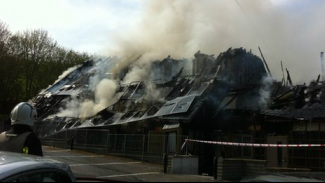
 Fire safety of solar photovoltaic systems has been in the news again, this time because of a fire on a hotel near Dartmoor with a PV system. The fire wasn't caused by the array itself, but its presence meant that firefighters were hesitant to tackle the blaze before it had caused severe damage to the building. Thankfully, no-one was even hurt. When designed and installed correctly PV systems are safe and a well-trained firecrew can deal with them. But, because they are relatively new to the UK, every time this comes up, people understandably question the safety of PV. Fighting Fires involving PV 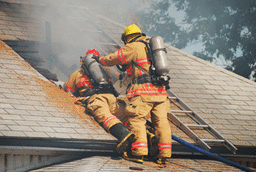 Firefighters are understandably wary of PV systems: By design, most installations will involve higher-than-normal voltage, DC circuits that are always live even when the mains is cut. However, a properly designed system will allow for that and minimise the exposure to the hazard. Furthermore, with proper training and equipment, the additional risk to firefighters tackling a blaze is actually minimal. However, one of the "issues" is that PV is so safe and fires happen so rarely that most crews don't have any experience in dealing with them! In fact, studies in the US and Germany have been carried out and have shown that if appropriate care is taken, the presence of a PV system should not affect whether a crew can tackle a blaze. Just earlier this month, the MCS held a conference specifically to address firefighters' concerns. It follows years of industry working with fire and rescue services (some of which I've been involved in). The aim of this particular conference was to bring those crews who had experienced PV fires together, so that lessons could be learned, procedures built on and crews trained appropriately. It also gave the industry a chance to communicate recent improvements in design: MCS scheme requirements also have recently changed to incorporate a number of ideas to help firefighters into designs and installations, such as fitting labels by the incoming fuse cut-out to signal that solar PV is on the roof. Minimising Risk by Design Obviously, as with any electrical system good workmanship, adherence to standards and using quality products will go a long way to providing a safe, reliable installation. But there are other best-practice details which are well worth bearing in mind for your project. A lot of it comes down to care and experience, but points include:
A lot of this comes down to taking time and care to do the job properly at both the design and installation stages, and then communicating the design with anyone that needs to know, such as fire crews and facility maintenance teams. Whether or not you think solar is an expensive energy source, there is no excuse for a rushed or cheap job.
0 Comments
Leave a Reply. |
News
Industry news and comment, as well as company announcements, by James, our Company Director Archives
September 2021
Categories |
 RSS Feed

Copyright © 2020. Cooper Energy Engineering Ltd is UK registered company, no. 8253361. VAT registration no. 161 4825 15.
Registered address: Oundle Wharf, Station Road, Oundle, Peterborough PE8 4DE
Registered address: Oundle Wharf, Station Road, Oundle, Peterborough PE8 4DE